
These engaging texts help students explore identity, culture, and belonging through Arab American voices and experiences.
Arab American Heritage Month offers an opportunity to center stories and perspectives that reflect the diversity of Arab American experiences. Through poetry, essays, and short stories, students can examine themes like identity, community, resilience, and representation.
These texts give secondary students opportunities to analyze figurative language, structure, and character development while engaging with meaningful and relevant texts.
“Little House of Blame” by Naomi Shihab Nye (7th Grade)
Speaking in second person, this poem describes the appeal of blaming others and compares blame to bricks that could be used to build a house, protecting the addressee from the difficult feelings of taking responsibility for failure. It’s a great example of the use of metaphor to develop a theme.
“Gate A-4” by Naomi Shihab Nye (8th Grade)
While waiting at an airport, the speaker helps translate for an older woman who believes her flight has been canceled, and the situation transforms into a shared moment of community. It’s a great text for a unit on identity, differences, breaking past stereotypes, and connections.
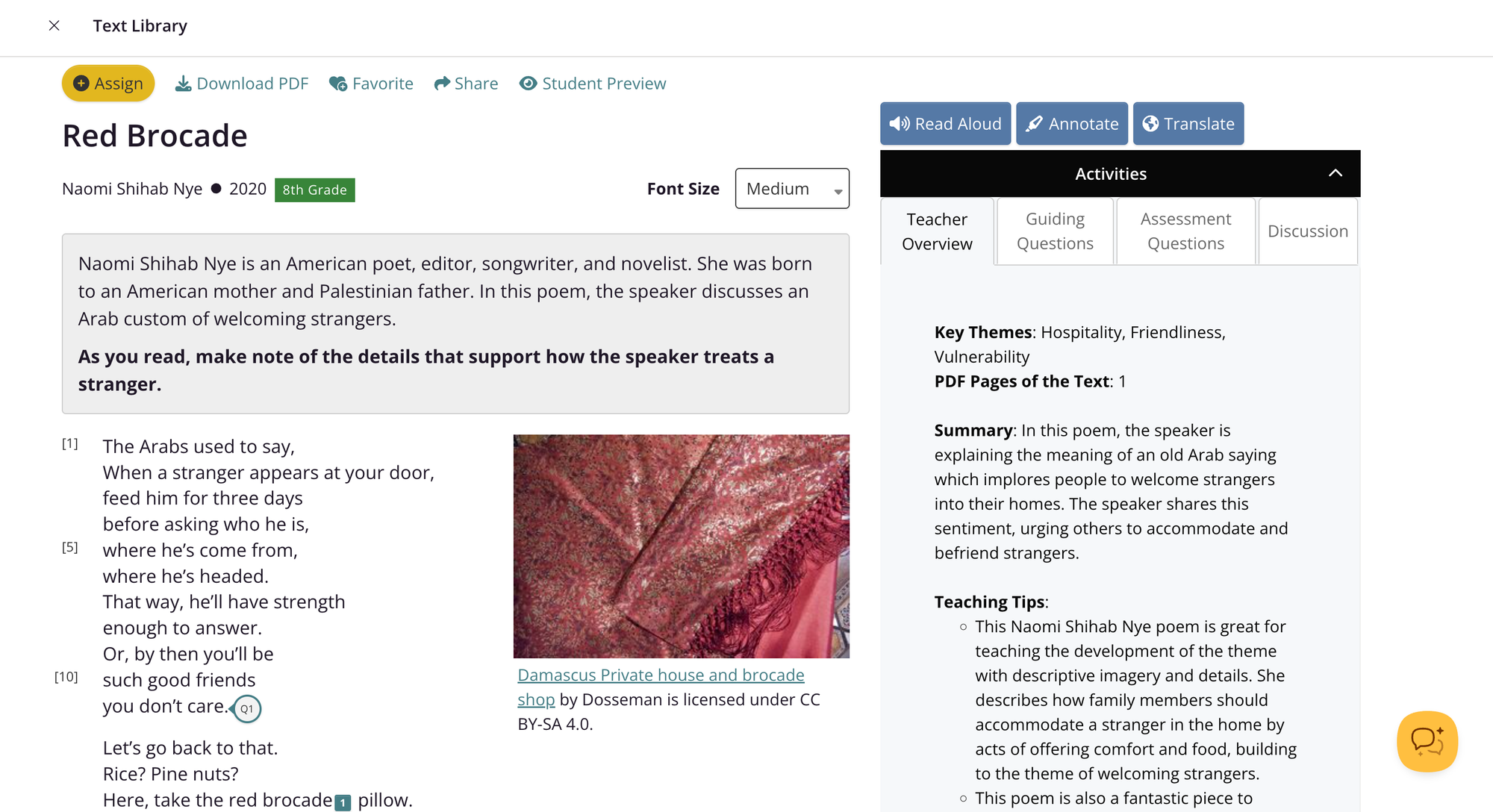
“Red Brocade” by Naomi Shihab Nye (8th Grade)
In this poem, the speaker explains an Arab saying about welcoming strangers and describes how families offer comfort and food to guests. It’s great for teaching the development of the theme with descriptive imagery and details.
“Gyroscopes” by Susan Muaddi Darraj (8th Grade)
Layla, an Arab-American student, feels uncomfortable with her school’s production of “Aladdin” but struggles to express why as she works on a project for the play. This short story is great for analyzing the development of Layla’s character throughout the text and how she gains confidence in speaking up for what she believes in.
“Different Ways to Pray” by Naomi Shihab Nye (9th Grade)
The speaker describes various ways people participate in prayer, from traditional rituals to everyday actions and moments of reflection. This is a great poem for students to analyze how a poet’s word choice affects the tone of a text.
“This Is Not Who We Are” by Naomi Shihab Nye (10th Grade)
In this essay, Naomi Shihab Nye reflects on her Arab American identity in the aftermath of 9/11, weaving together memories, observations, and emotions. This essay is a great text for students to analyze a non-chronological way of structuring a personal essay as well as the use of figurative language, such as extended metaphor and imagery.
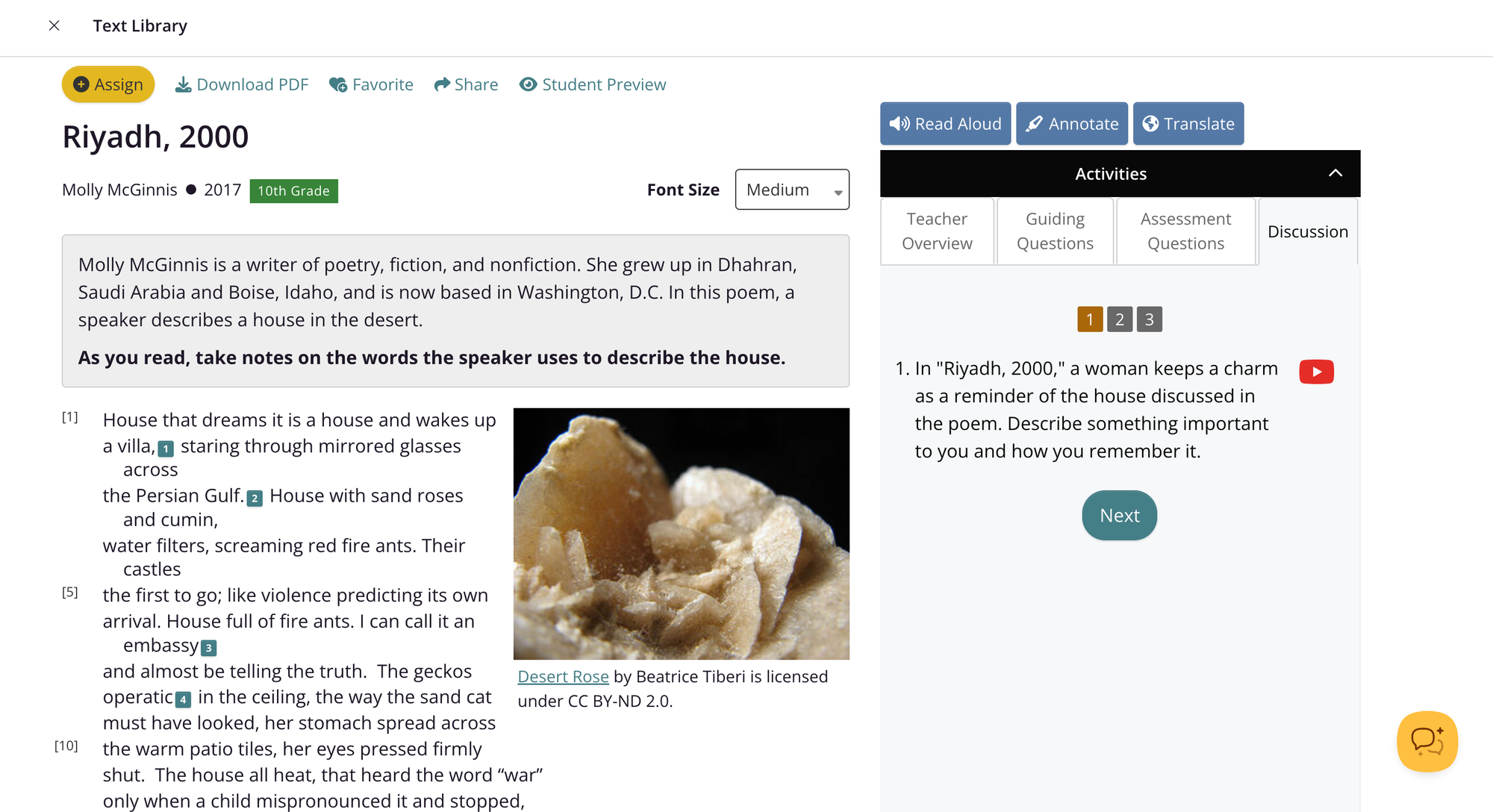
“Riyadh, 2000” by Molly McGinnis (10th Grade)
The speaker describes a home in Riyadh across different moments of conflict, showing how it changes from a beloved space into a memory shaped by destruction. This poem is well-suited to analyzing how imagery creates meaning in the poem.
“Sandwiched in Between” by Eric Smith (10th Grade)
Michael and Amina navigate questions about identity and family during Thanksgiving as they reflect on their backgrounds and experiences. This is a great text for analyzing how events in a story develop characters and themes.
“The Leather Jacket” by Susan Muaddi Darraj (11th Grade)
The narrator reflects on Suleiman’s actions as their father lies gravely ill, leading to a moment of confrontation and change. This short story is great for teaching indirect characterization because of the ways in which the author illustrates character traits before naming them.
Want to bring CommonLit to your whole school?
If you love these texts and want to use CommonLit in your classroom more often, consider one of our paid partnerships. You can connect with our team to learn how your whole school can level-up CommonLit usage with professional development, assessments, school-wide data reports, and personal support from our team of instructional experts.
