10 Engaging Poems to Teach for National Poetry Month

These engaging poems help students explore voice, identity, imagination, and the power of language.
National Poetry Month is the perfect time to bring poetry into your classroom in ways that feel meaningful and accessible. From classic works by writers like William Shakespeare and Robert Frost to contemporary voices like Fatimah Asghar and Margarita Engle, these poems invite students to explore identity, culture, and the power of language.
This collection of poems spans grades 3 through 12 and gives students opportunities to analyze figurative language, tone, and structure while engaging with memorable and meaningful themes.
“The Dentist and the Crocodile” by Roald Dahl (3rd Grade)
This humorous poem introduces students to a dentist who is afraid to treat a crocodile patient. When a woman enters the office, the dentist tries to save her before learning that the crocodile is actually her pet. Students enjoy the twist ending while teachers can use the poem to introduce rhyme scheme and analyze its ABAB pattern.
“Poetry Means the World to Me” by Tony Medina (4th Grade)
This poem imagines the voice of Langston Hughes and reflects on the importance of poetry in expressing emotions and fighting against hate. The speaker describes how poetry can be used to convey powerful ideas and feelings. This text is great for supporting lessons on word choice because Medina uses surprising words to describe poetry.
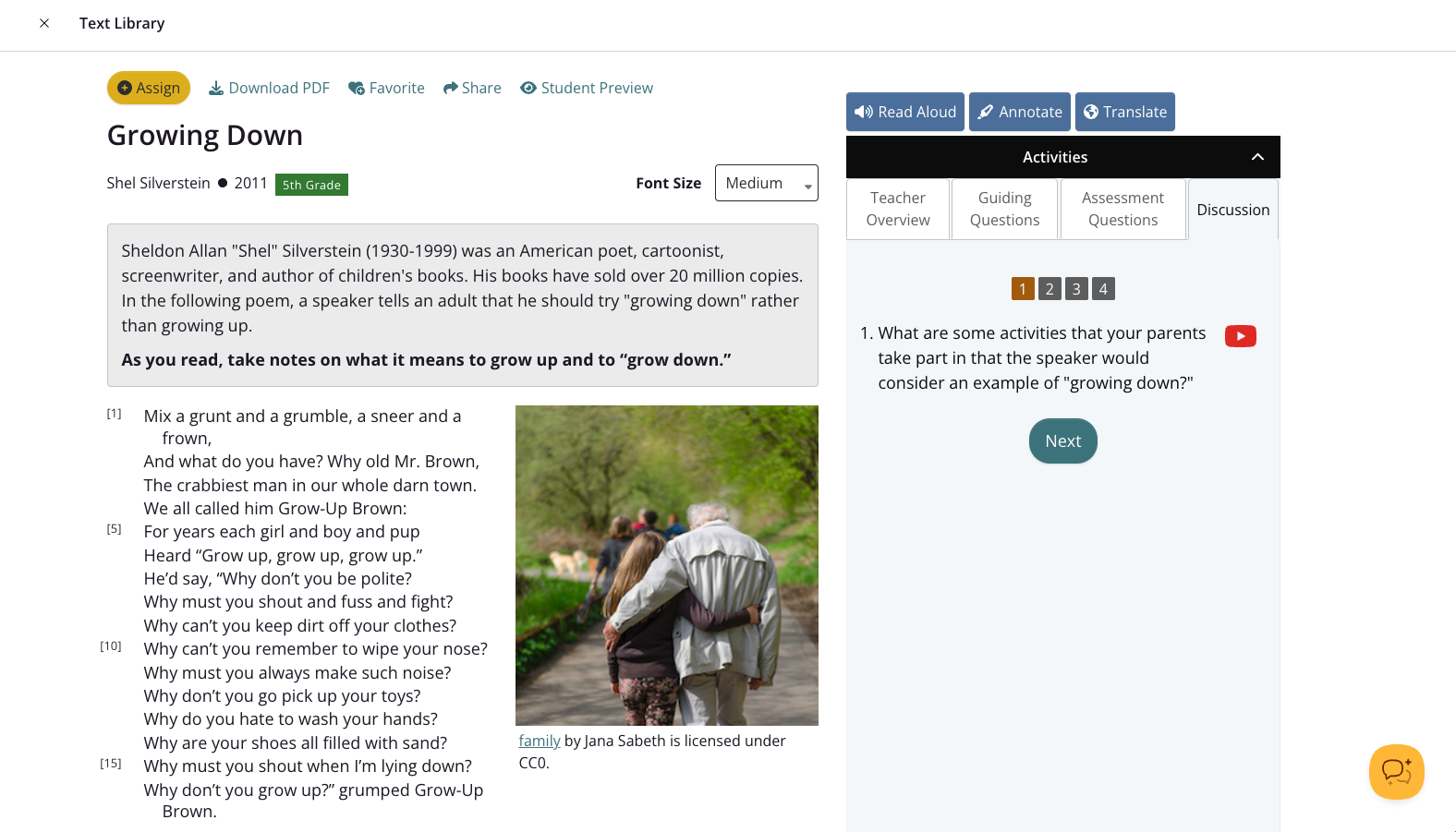
“Growing Down” by Shel Silverstein (5th Grade)
In this poem, Grow-Up Brown questions why children behave the way they do until they invite him to join their activities. After participating in games like climbing trees and having pillow fights, he realizes how fun it is to act young. Students can analyze point of view and explore how the character’s changing perspective reveals the importance of embracing childlike fun.
“Drum Dream Girl” by Margarita Engle (6th Grade)
This poem tells the story of a girl who dreams of playing the drums in a society where only boys are allowed to do so. She hears music in everyday sounds and continues to pursue her passion despite cultural expectations. Students can analyze imagery and discuss how descriptive language emphasizes her enthusiasm for music.
“Mother to Son” by Langston Hughes (7th Grade)
In this poem, a mother speaks to her son about the hardships she has faced in life. She compares her life to a staircase that is difficult and unfinished but explains that she has continued to climb. Students can analyze the extended metaphor and consider how it reflects perseverance.
“We Real Cool” by Gwendolyn Brooks (8th Grade)
The speaker observes a group of young men at a pool hall who are not in school and are focused on having fun. The poem suggests that the young men are aware that their choices may lead to consequences. Students can examine how Brooks’ use of repetition develops themes around following a crowd and avoiding responsibility.
“Nothing Gold Can Stay” by Robert Frost (9th Grade)
The speaker describes how quickly nature changes, focusing on leaves and the shifting seasons. The poem connects these changes to larger ideas about life and the loss of beauty over time. Students can analyze how metaphor is used to convey the transient nature of life.
“Sonnet 18” by William Shakespeare (10th Grade)
In this sonnet, the speaker compares his lover to a summer’s day and describes them as even more beautiful. He suggests that the poem itself will preserve the lover’s beauty over time. Students can analyze imagery and extended metaphor and use the poem as a model for descriptive writing.
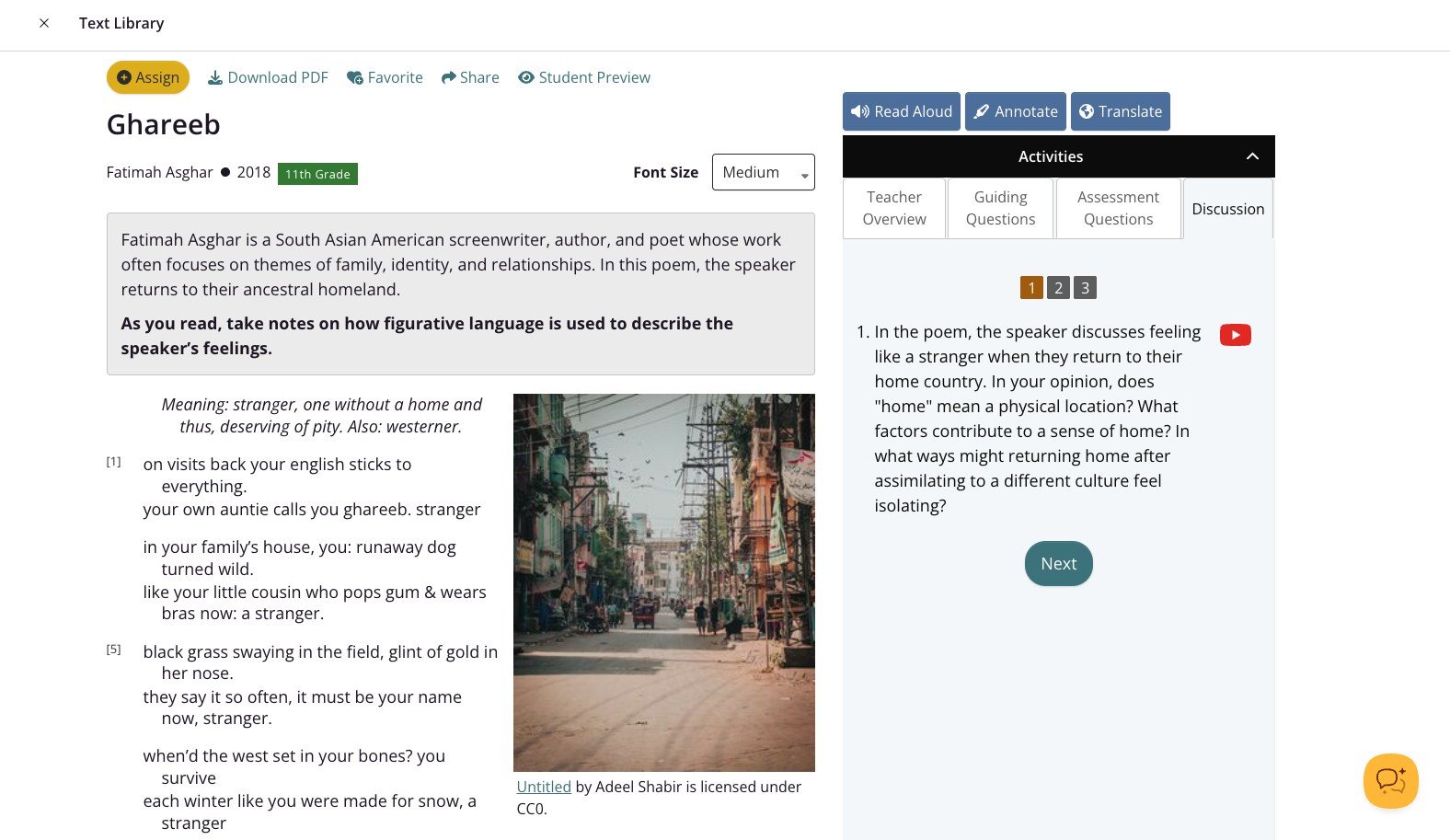
“Ghareeb” by Fatimah Asghar (11th Grade)
The speaker reflects on feeling out of place while visiting their ancestral homeland. They consider how moving away has affected their connection to language, culture, and identity. Students can analyze structure and repetition while exploring themes of identity and belonging.
“Morning in the Burned House” by Margaret Atwood (12th Grade)
The speaker imagines a childhood home after it has been destroyed by fire and moves through it in a dreamlike state. She observes familiar details while recognizing the absence of her family. Students can explore the literary device of motif since the fire in the poem most likely reflects both the destructive and regenerative nature of fire.
Want to bring CommonLit to your whole school?
If you love these poems and want to use CommonLit in your classroom more often, consider one of our paid partnerships. You can connect with our team to learn how your whole school can level-up CommonLit usage with professional development, assessments, school-wide data reports, and personal support from our team of instructional experts.
