10 Spring Poems and Stories for Your ELA Classroom

These spring-themed poems and stories for elementary, middle, and high school classrooms help students explore nature, change, and the season ahead.
As the weather warms and signs of new life appear, the transition into spring offers a natural opportunity for students to pause and notice the world around them. Migrating animals, rainy days, blooming plants, and longer afternoons all signal that a new season has arrived.
This collection of fiction and poetry explores themes such as change, growth, memory, and discovery. These texts help students connect literature to the shifting season while encouraging thoughtful discussion and close reading in the classroom.
“I Can Hear Spring” by Sally Selleck (3rd Grade)
One of the clearest signs that the season is changing is the return of migrating birds. In this story, the narrator realizes the season has begun when they hear geese flying overhead and watch them land in a nearby field before continuing their journey north. Students enjoy noticing these seasonal clues while practicing how to infer a narrator’s feelings and identify figurative language and repetition.
“Worms in Danger” by Elizabeth Kuelbs (4th Grade)
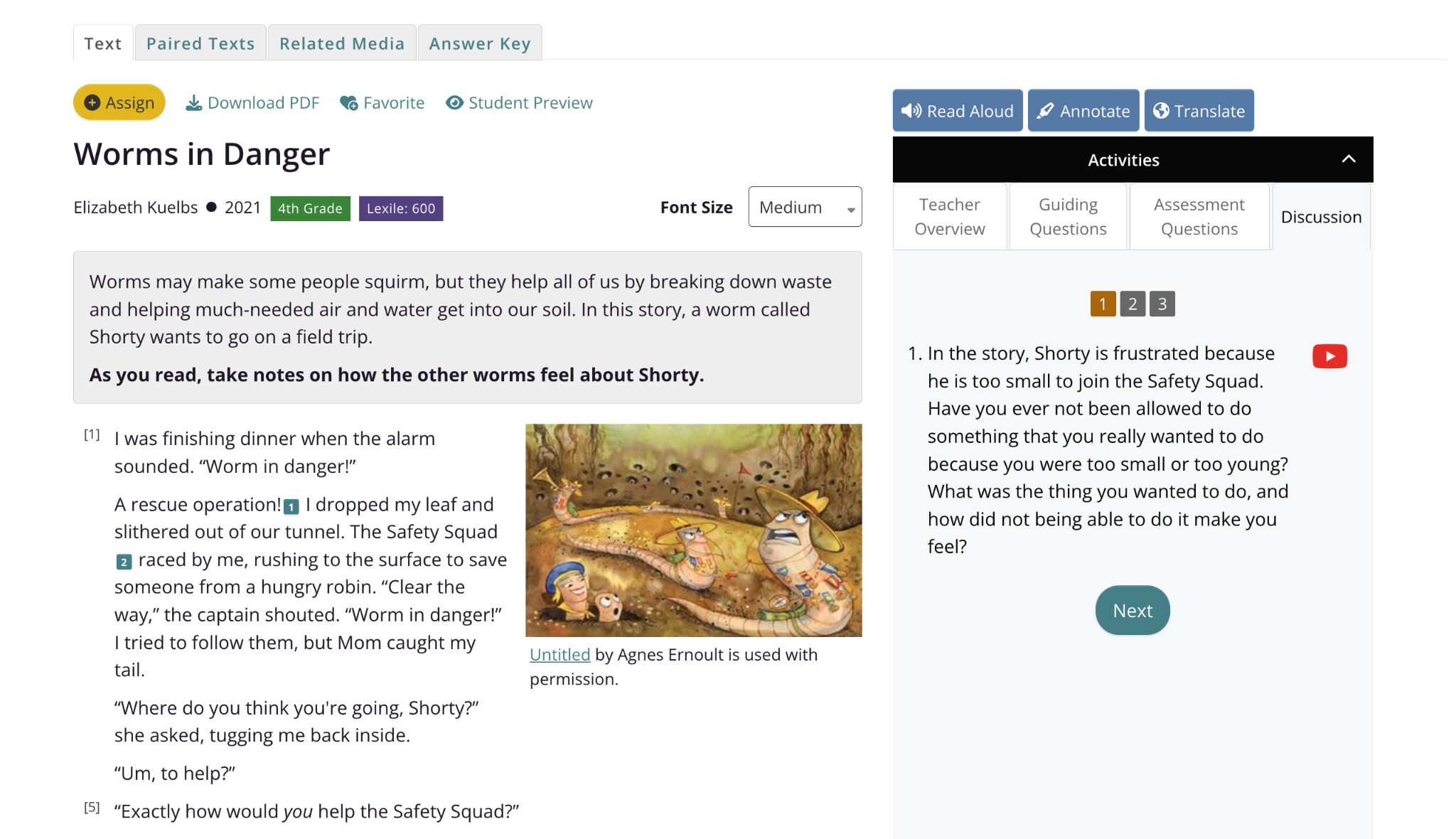
As the weather warms, small creatures begin to emerge and the natural world becomes more active. In this story, a young worm named Shorty proves he is capable of helping when he distracts a puppy that is disturbing worms at Compost Mountain. Students enjoy the action and unique narrator while teachers can use the text to explore character development and point of view.
“The Smell of Rain” by Jennifer Owings Dewey (5th Grade)
Rainstorms and changing weather patterns are a familiar part of this time of year. In this story, two cousins debate whether people and animals can actually smell rain before a storm and investigate the mystery by observing nature and asking an adult for an explanation. The text encourages discussion about perspective while helping students think about how humans notice and interpret changes in the natural world.
“Swarm” by Alan King (6th Grade)
Seasonal change often encourages people to reflect on moments that shaped them. In this poem, the speaker watches two students fighting and is reminded of a childhood fight connected to a crush and a valentine. The reflection encourages discussion about growing up and choices while giving students the opportunity to analyze figurative language and theme.
“Excerpt from Alice’s Adventures in Wonderland: Down the Rabbit Hole” by Lewis Carroll (7th Grade)
The changing seasons can spark curiosity and a sense of adventure. In this excerpt, Alice follows a white rabbit down a rabbit hole, shrinks after drinking from a mysterious bottle, and tries to reach a key that will open the door to a beautiful garden. Students enjoy Alice’s imaginative journey while teachers can use the passage to analyze characterization through her thoughts and reactions.
“Wild Geese” by Mary Oliver (8th Grade)
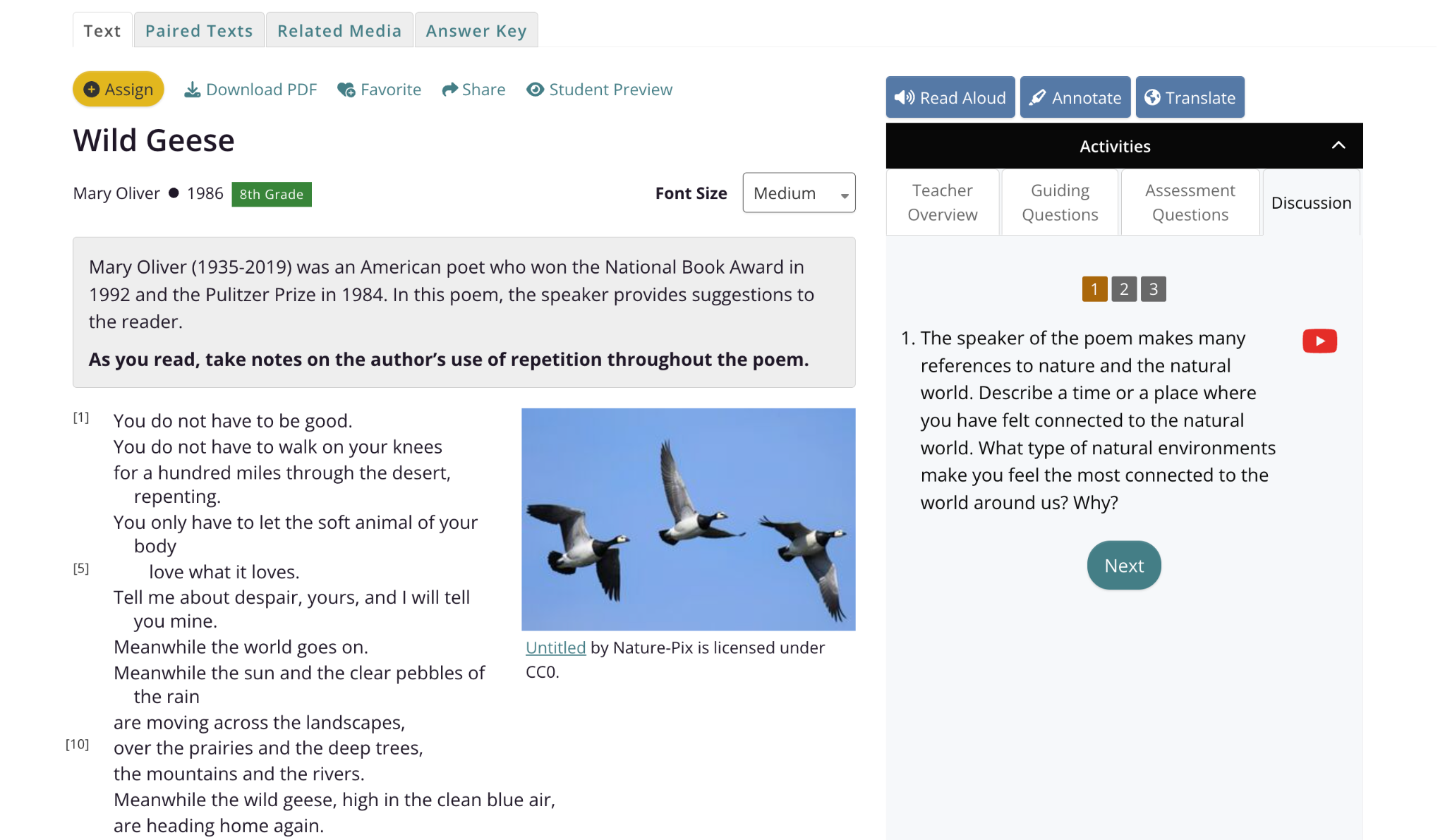
Time spent outdoors often encourages reflection about the world and our place within it. In this poem, the speaker reminds readers that while people experience struggle, nature continues steadily and everyone has a place in the world. Students can analyze how the poem’s tone moves from somber to hopeful while discussing the comforting role nature can play in people’s lives.
“Ripe Figs” by Kate Chopin (9th Grade)
Gardens and ripening fruit often remind us that growth cannot be rushed. In this short story, Babette eagerly waits for figs to ripen so she can visit her cousins, checking them daily while Maman-Nainaine calmly waits. The story sparks discussion about how people experience time differently and provides an excellent opportunity to analyze symbolism.
“Eros the Contagion” by Annie Kim (10th Grade)
Moments in nature can spark connection and shared joy between people. In this poem, the speaker reflects on watching two people delight in discussing a persimmon tree and considers how love spreads between individuals. Students can explore the poem’s metaphors and discuss how the poet represents love as something that can be shared and experienced together.
“The Secret Source” by Ben Okri (11th Grade)
Stories about survival and renewal often resonate during times associated with change. In this dystopian narrative, Fisher and Venus search for clean water in a crumbling city and eventually encounter a mysterious boy who leads them to a glowing water source. The ambiguous ending encourages rich classroom discussion about theme, reality, and hope within dystopian worlds.
“Eleonora” by Edgar Allan Poe (12th Grade)
Lush landscapes in literature often symbolize emotional change and transformation. In this story, the narrator recalls falling in love with Eleonora in the Valley of the Many Colored Grass before later leaving and marrying another woman after her death. The vivid descriptions of the valley make the text ideal for analyzing imagery and symbolism.
Reach More Students with CommonLit
As schools work to strengthen reading proficiency, the CommonLit Text Library offers thousands of engaging texts that connect to the topics students are already exploring in class. Teachers rely on these ready-to-teach passages and discussion questions to support meaningful reading practice across grade levels.
Ready to try it with your students? Log in to your free CommonLit educator account and explore the CommonLit Text Library to assign a text today.
Want to bring CommonLit to your whole school?
Connect with our team to learn how your school can get even more out of CommonLit’s program with a paid partnership. Our partnerships include professional development, assessments, school-wide data reports, and personal support from our team of instructional experts.
