Elementary Classrooms Secondary Classrooms 10 Texts to Celebrate AAPI Heritage Month in Your ELA Classroom

These engaging texts help students explore identity, culture, and belonging through Asian American and Pacific Islander voices and experiences.
Asian American and Pacific Islander Heritage Month is an opportunity to center stories and perspectives that reflect the diversity of AAPI experiences. Through poetry, memoir, short stories, and nonfiction, students can examine themes like identity, community, resilience, and representation.
This collection spans grades 3–12 and gives students opportunities to analyze figurative language, character development, and author's purpose while engaging with meaningful and relevant texts.
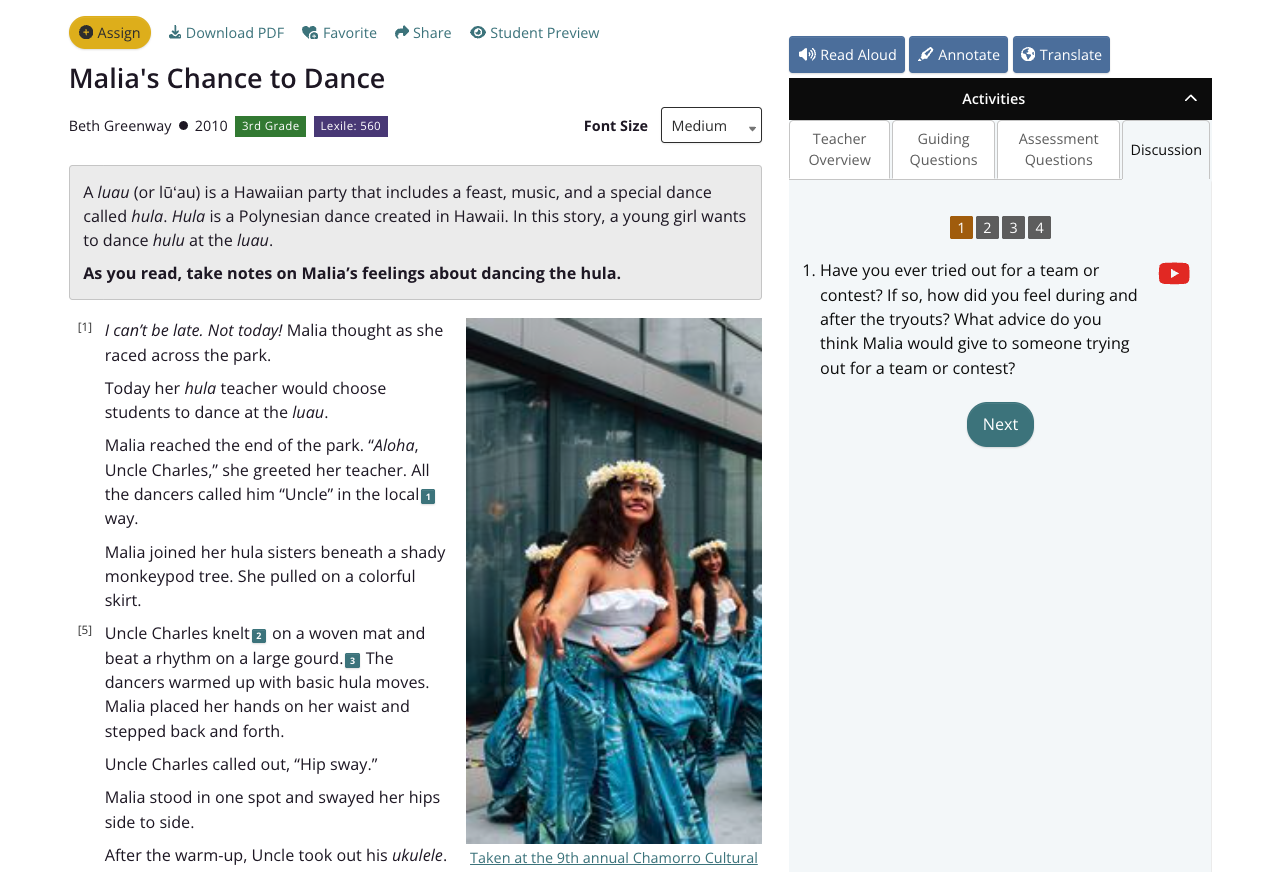
“Malia's Chance to Dance” by Beth Greenway (3rd Grade)
Cultural traditions and the courage to perform can teach us powerful lessons about expression and belonging. In this story, Malia auditions to dance hula in a luau, makes a mistake during her performance, but is chosen anyway for her joy and expression. This is a great text for teaching the central message of a story by thinking about the lesson a character learns, and it opens the door to meaningful conversations about dance and music in world cultures.
“Miami to Fujian” by David Kwee (4th Grade)
A trip back to one's birthplace can change the way a person understands themselves. In this story, Mariel, a girl adopted by a Cuban family in Miami, travels to China to visit the orphanage where she grew up and returns home with a deeper sense of who she is. This short story is well-suited for analyzing character motivations and feelings, particularly how Mariel's feelings about her identity change throughout the text.
“Eyes on the Tide” by Judy Walker (5th Grade)
The effects of climate change are not abstract for communities across the Pacific Ocean. In this nonfiction text, students learn how rising sea levels, worsening storms, and dying coral reefs are threatening Pacific Island communities and how those communities are responding. This is a great text for teaching cause and effect, and it is also ideal for teaching point of view and how evidence can be used to support an argument.
“Hello, My Name Is ______” by Jason Kim (6th Grade)
Choosing a name can mean choosing between two worlds. In this memoir, Jason Kim reflects on adopting an American name as a ten-year-old, rejecting his Asian identity, and eventually discovering how powerful media representation of Asian Americans can be. This text would be great for a lesson about migration, diasporas, or belonging.
“The Lemon Tree Billiards House” by Cedric Yamanaka (7th Grade)
In this story, a game of pool becomes about much more than winning. Mitch, a talented pool player who believes he has been cursed, faces off against a challenger named Locust and realizes that winning may be the key to freeing them both. This engaging story is a good choice for a lesson that examines how a character's thoughts and actions can develop a text's theme.
“Amphibians” by Joseph O. Legaspi (8th Grade)
Living between two worlds takes a special kind of strength. In this poem, the speaker compares the experience of immigrants to amphibious animals that adapt to life both on land and in water. Students can analyze how this central metaphor builds the poem's theme.
“Surviving” by Marie Lu (9th Grade)
Survival can mean very different things to different generations. In this memoir, Marie Lu describes watching the Tiananmen Square protests as a young child, fleeing to the United States with her family, and eventually learning that true survival means making courageous choices for yourself. This text is great for teaching how to analyze the relationship between two or more central ideas.
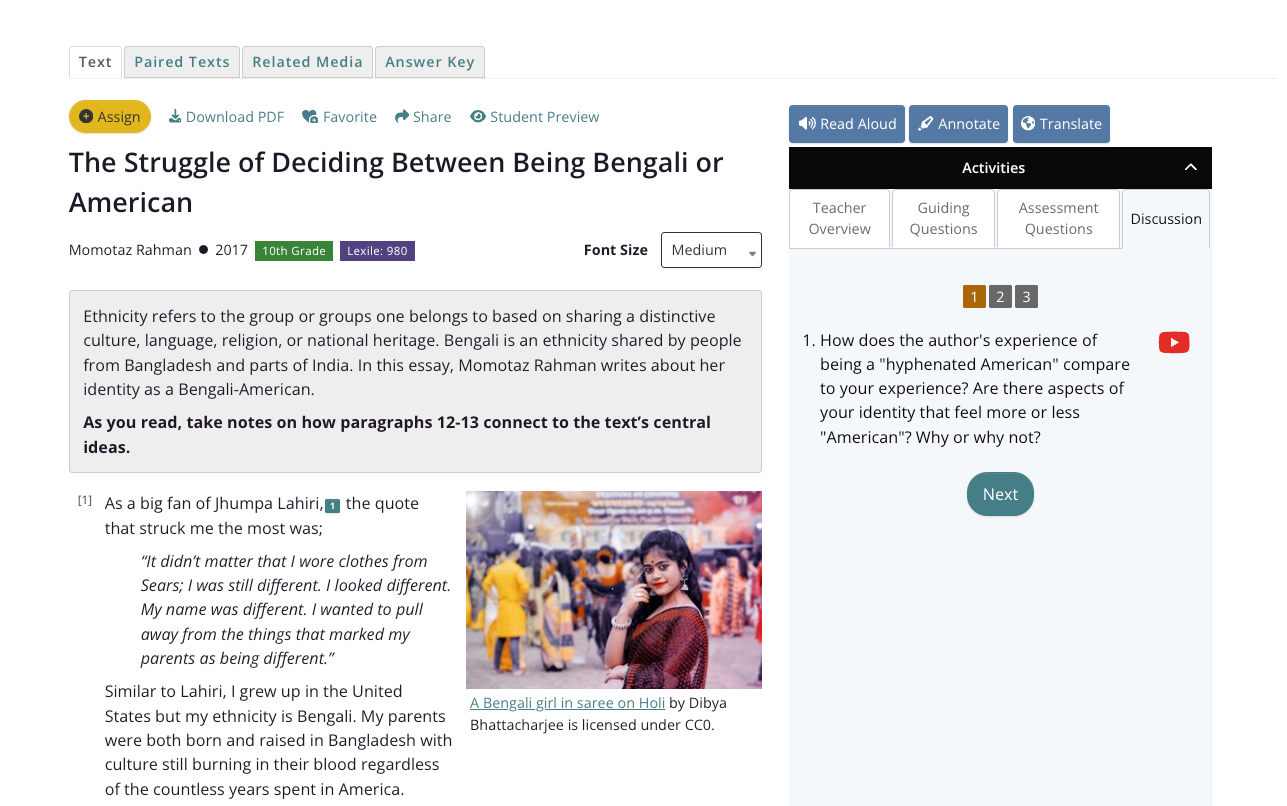
“The Struggle of Deciding Between Being Bengali or American” by Momotaz Rahman (10th Grade)
Growing up between two cultures can feel like being asked to choose until you realize you don't have to. In this personal essay, the author reflects on navigating her Bengali and American identities and her ultimate decision to claim both. This is an excellent text for analyzing an author's purpose and how details support that purpose.
“Tell Them” by Kathy Jetn̄il-Kijiner (11th Grade)
A package of earrings carries an urgent message about a people and a place in danger. In this poem, the speaker asks friends in the United States to tell others about the Marshall Islands, its culture, and the rising seas threatening to erase it. Students can analyze the impact of word choice on tone through the poet's use of repetition and figurative language.
“The Cooking Lesson” by Sasha Hom (12th Grade)
A simple meal can carry the weight of generations. In this short story, a narrator reflects on her grandparents' sacrifices, her complicated relationship with her parents, and her desire to simply express herself. This is an excellent text for analyzing how an author develops characters and elements of a story.
Want to bring CommonLit to your whole school?
Connect with our team to learn how your school can get even more out of CommonLit’s program with a paid partnership. Our partnerships include professional development, assessments, school-wide data reports, and personal support from our team of instructional experts.
