
Teachers can use supplemental texts to address the specific needs of their students
Our comprehensive ELA curriculum, CommonLit 360, embodies the perfect combination of evidence-based practices and features students and teachers love. It provides content-rich units designed to build students’ knowledge of a wide range of interesting and relevant topics. And it provides ample support for all learners through lesson scaffolding and customization options available to teachers.
One such customization option is the availability of a set of supplemental texts. These are available for every CommonLit 360 unit.
Supplemental Texts in CommonLit 360 Units
Each CommonLit 360 unit comes with both unit texts and supplemental texts. These unit texts are referenced during discussion lessons, writing lessons, and the Culminating Task. They are all aligned to a particular grade level and are deliberately ordered to build targeted skills and content knowledge to assist students in answering the unit’s essential question.
The supplemental text sets offer flexibility. Supplemental texts are tightly related to the unit’s content, and build knowledge topically or thematically. They offer teachers the freedom of choice for when and how they’ll be utilized within the unit.
Incorporating Supplemental Texts
To demonstrate how teachers can use CommonLit 360’s supplemental texts in their instructional planning, I will use Grade 7, Unit 2: Adolescence as an example. In this 360 unit, students will explore adolescence by reading a series of texts that address subjects like teen romance, popularity, and the challenges of growing up.
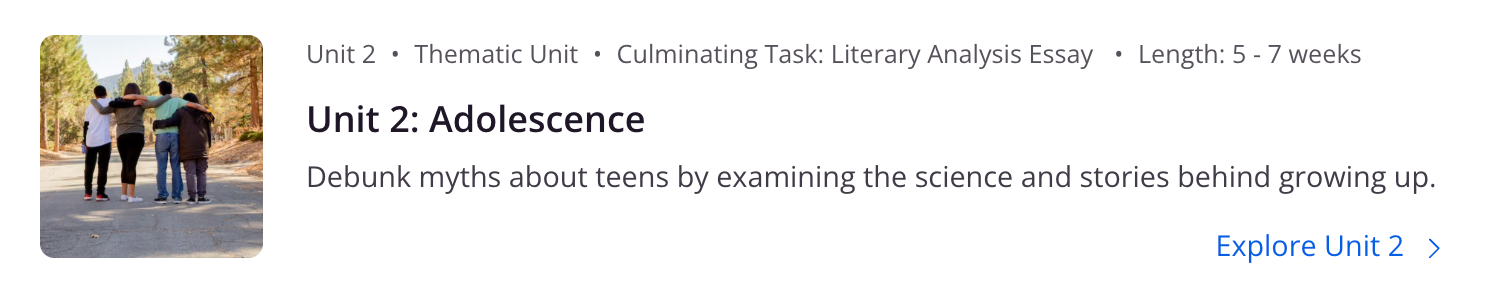
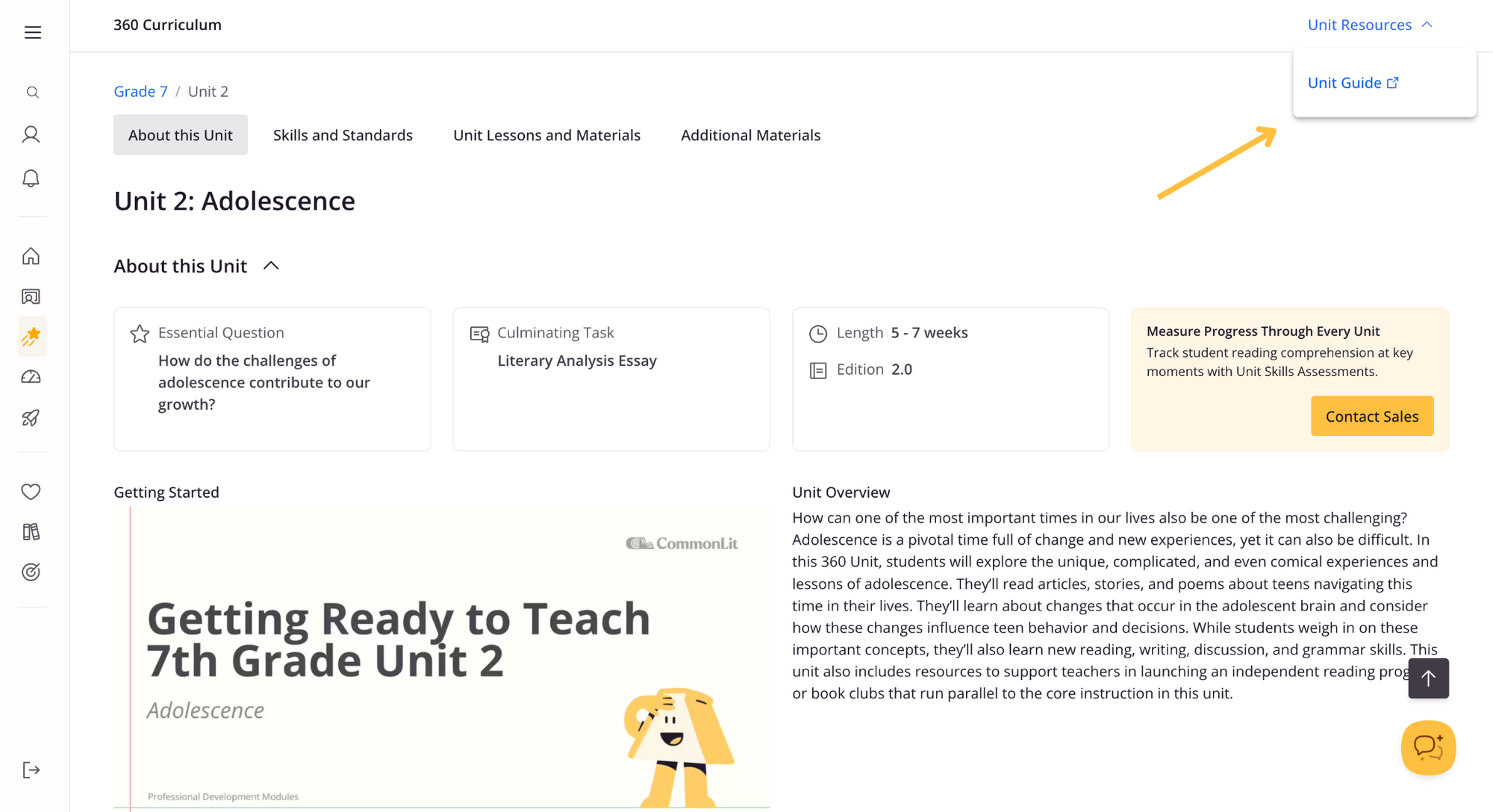
First, check out the arc of reading instruction within this unit below. You can find this in the PDF Unit Guide for the Adolescence unit under the “Unit Resources.”
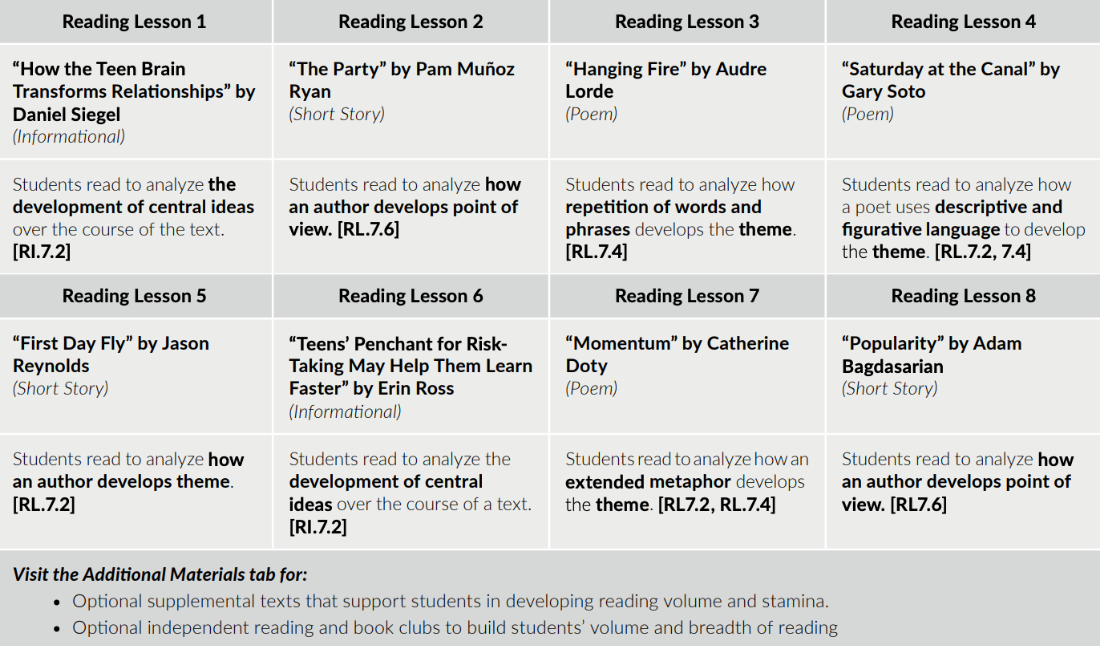
Here, you will see that there are 8 unit texts, including three short stories, three poems, and two informational texts.
This unit also includes a set of supplemental texts. You can find a list of these texts on the Unit Guide, and you can preview them from the Lessons & Materials page. The supplemental texts for this unit include the following:
- “The Friend Who Changed My Life” — in this Target Lesson, students read about a fifth grade girl who has just moved to a new school and is being bullied.
- “Seventh Grade” — a high-interest short story about adolescent relationships.
- “Animal adolescence is filled with teen drama and peer pressure” — an informational text that draws similarities between adolescent behavior of humans and animals.
- “What to Expect from Adolescence” — an informational text perfect for discussing the essential question of the unit: What makes adolescence challenging?
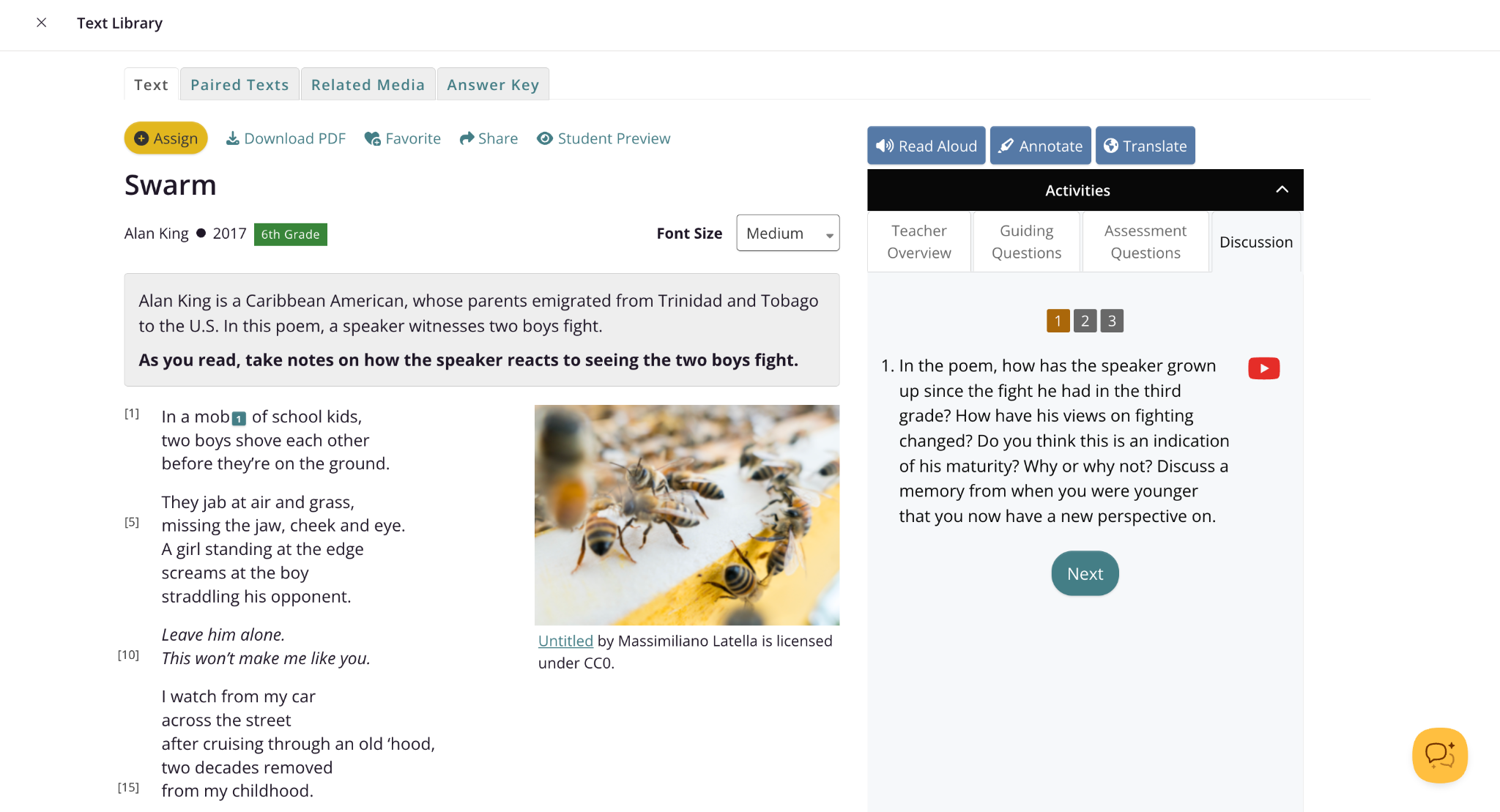
- “Swarm” — a poem where a speaker witnesses two young boys fight.
As you can see, these texts offer a variety of options for teachers, and they all directly relate to the unit’s theme and topic.
Using “Flex Days” for Supplemental Texts
Pacing can be a challenge. To make it easier, each CommonLit 360 unit comes with a sample pacing guide also included in the PDF Unit Guide.
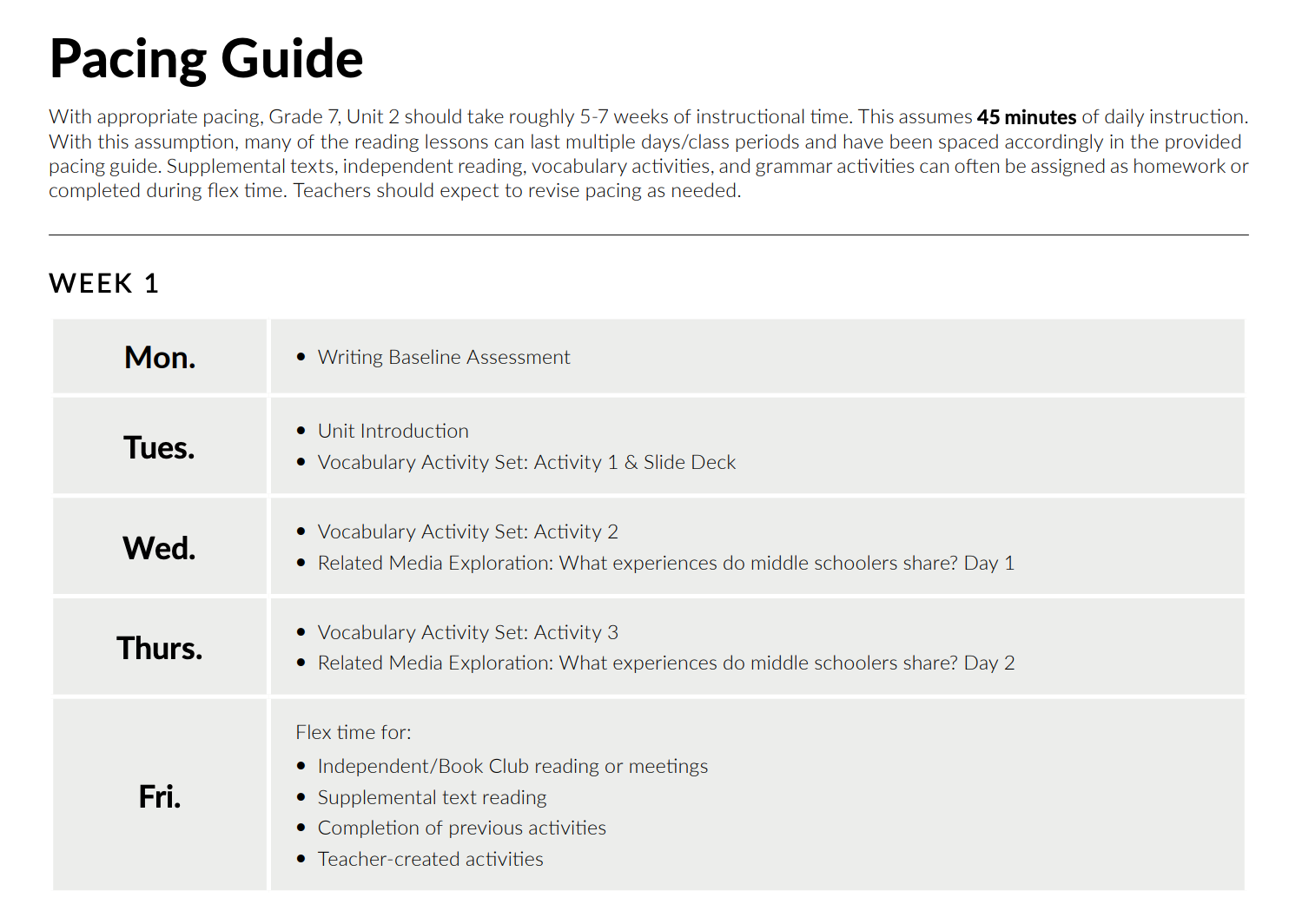
As part of every pacing guide, CommonLit has mapped out designated days for “flex,” knowing that kids are kids, things take longer than anticipated, and plans often change. These flex days can also be utilized for teaching into the supplemental texts.
Let’s take a look at one example of how a teacher might effectively use the supplemental texts of Grade 7 Unit 2 on a flex day.
Using Supplemental Texts to Reteach a Skill
As the unit progresses, the teacher notices that the students are struggling more than anticipated with analyzing the unit’s poems, “Hanging Fire,” “Saturday at the Canal,” and “Momentum.” They don't want to move on to the writing lessons and informational texts without addressing this issue, so they return to the supplemental texts to plan a lesson for re-teaching and support. They find the poem “Swarm” from the supplemental set and believe it will be perfect for reinforcing their students’ poetry analysis. Because “Swarm” relates to the rest of the unit thematically, the teacher is able to seamlessly incorporate it into the unit.
Other Approaches: Student Choice, Background Knowledge, and More
The approach described above is just one idea for how to utilize the supplemental texts within the 360 curriculum. We’ve also seen other great implementation methods including:
- Assigning all of the supplemental texts as independent reading, as a way to significantly ramp up the breadth of reading within a unit,
- Using the supplemental text to introduce student choice, like telling students to pick two from the set to read independently,
- Selecting texts from the set for background knowledge building, focusing on cross-textual connections and rich discussion,
- And more!
The Flexibility of Supplemental Text Lessons
As you can see, supplemental texts can fit into CommonLit 360 units in many different ways. Teachers can use the texts as homework, group work, extra practice on a specific skill, or an extension exercise for students ready for a challenge. And teachers have the freedom to incorporate these texts at any point in the unit in ways that they see fit.
Interested in Learning More About CommonLit 360?
One of our many goals at CommonLit is to ensure that teachers have the structure, insight, and support needed to help students read and understand grade-level texts. That’s where School Essentials PRO Plus - and our team of CommonLit 360 experts - come in. School Essentials PRO Plus supports the school and district-level rollout of the CommonLit 360 curriculum with additional assessments, professional learning, and ongoing support.
