
In CommonLit 360, writing instruction is woven into reading and discussion lessons from the very first unit.
Teaching students to write while also teaching them to read closely and discuss effectively can feel like three separate jobs crammed into one class period. But all three together—reading, writing, and speaking and listening—make up the full picture of English Language Arts. CommonLit 360 is here to help you make sure your students are getting high quality instruction across the board.
What Writing Instruction Looks Like Across a Year
CommonLit 360 is built on the foundation that effective writing stems from a deep understanding of texts and written content. To say it plainly, this means learning to read helps students learn to be strong writers. Throughout the year, students have ongoing opportunities for both formal and informal writing tasks, moving through each step of the writing process and experimenting with different writing skills. Students learn new genres of writing, like argumentative and narrative writing, practice components of essays, learn about feedback and revision, and apply learned grammar to their writing
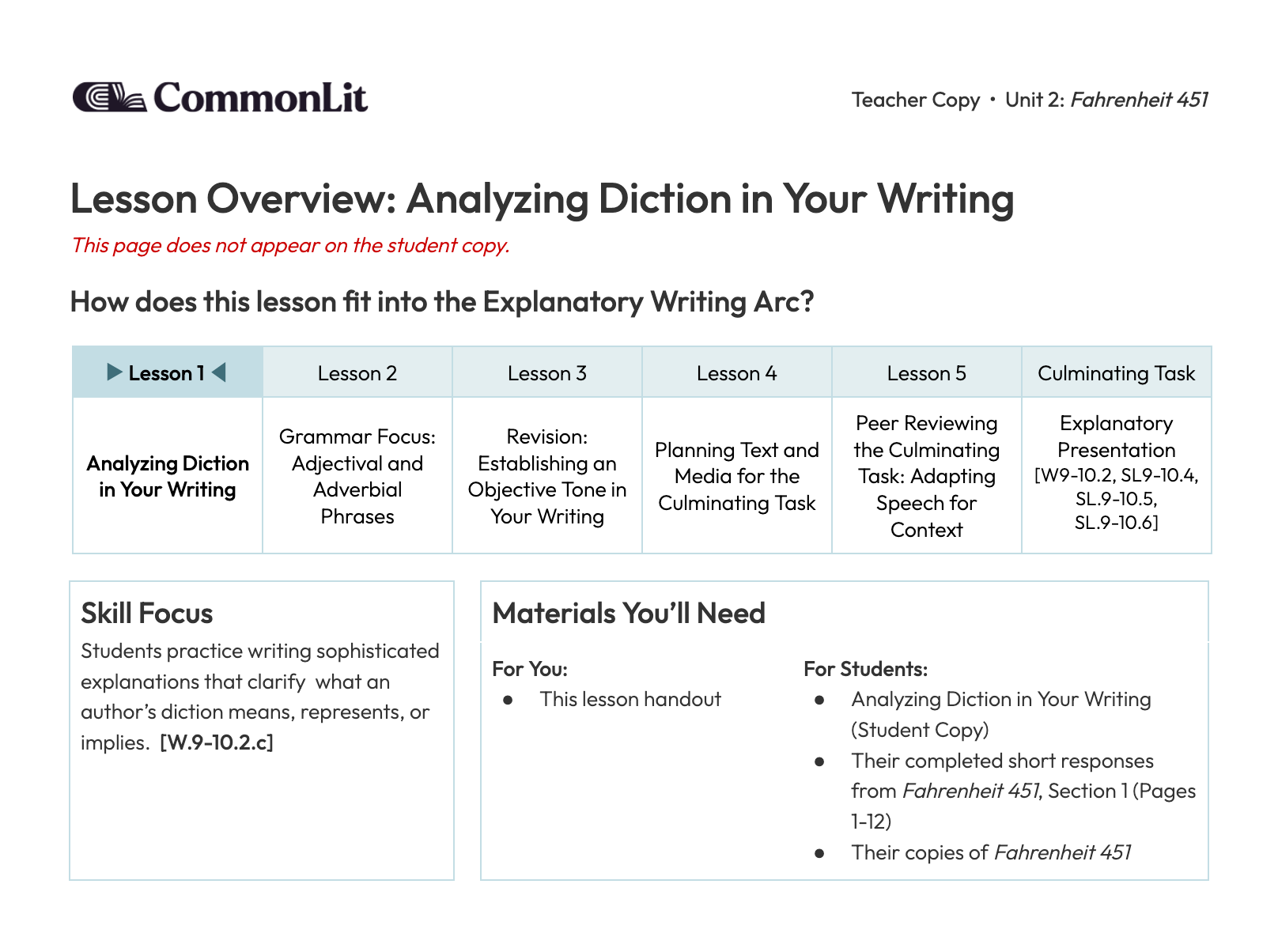
CommonLit 360 Writing Lessons
Writing lessons are integrated into every CommonLit 360 unit, guiding students through skills from crafting a clear and purposeful argument, to writing cohesive paragraphs, essays, and presentations. Students analyze and evaluate passages from core unit texts and from exemplary student writing to learn about the elements that make these pieces of writing effective, such as word choice, sentence structure, rhetoric and organization. They’ll then experiment with these elements in their own work through guided drafting, revision, and editing.
Students are supported throughout the writing process with:
- Anchor Charts and Reference Sheets that support students in reviewing key writing skills.
- Writing checklists that build agency in self-assessment and strengthen students' independence in the writing process.
- Note-taking graphic organizers that encourage students to synthesize and express their ideas clearly.
Writing in CommonLit 360 Reading and Discussion Lessons
Additionally, writing instruction is embedded in reading and oral language instruction. At the end of each reading lesson, students recap their learning informally through short, on-demand written responses.
During reading lessons, students are prompted to engage with texts in ways that directly support their own writing development:
- Written During Reading questions encourage students to stop and write about the passage at hand, deepening their learning and analysis.
- Find Evidence questions encourage students to identify relevant evidence to support their inferences about and analysis of the text.
- Annotation Tasks require students to read a passage with a specific purpose, taking focused notes by making inferences, paraphrasing, or synthesizing.
Breaking down ideas and thought processes with peers is also an essential part of developing ELA skills. CommonLit 360 places a strong emphasis on speaking and listening. Turn and Talk questions and Partner Discussions during reading lessons allow students to express their learning and comprehension of texts quickly and informally, leveraging collaboration to further develop their ideas before writing.
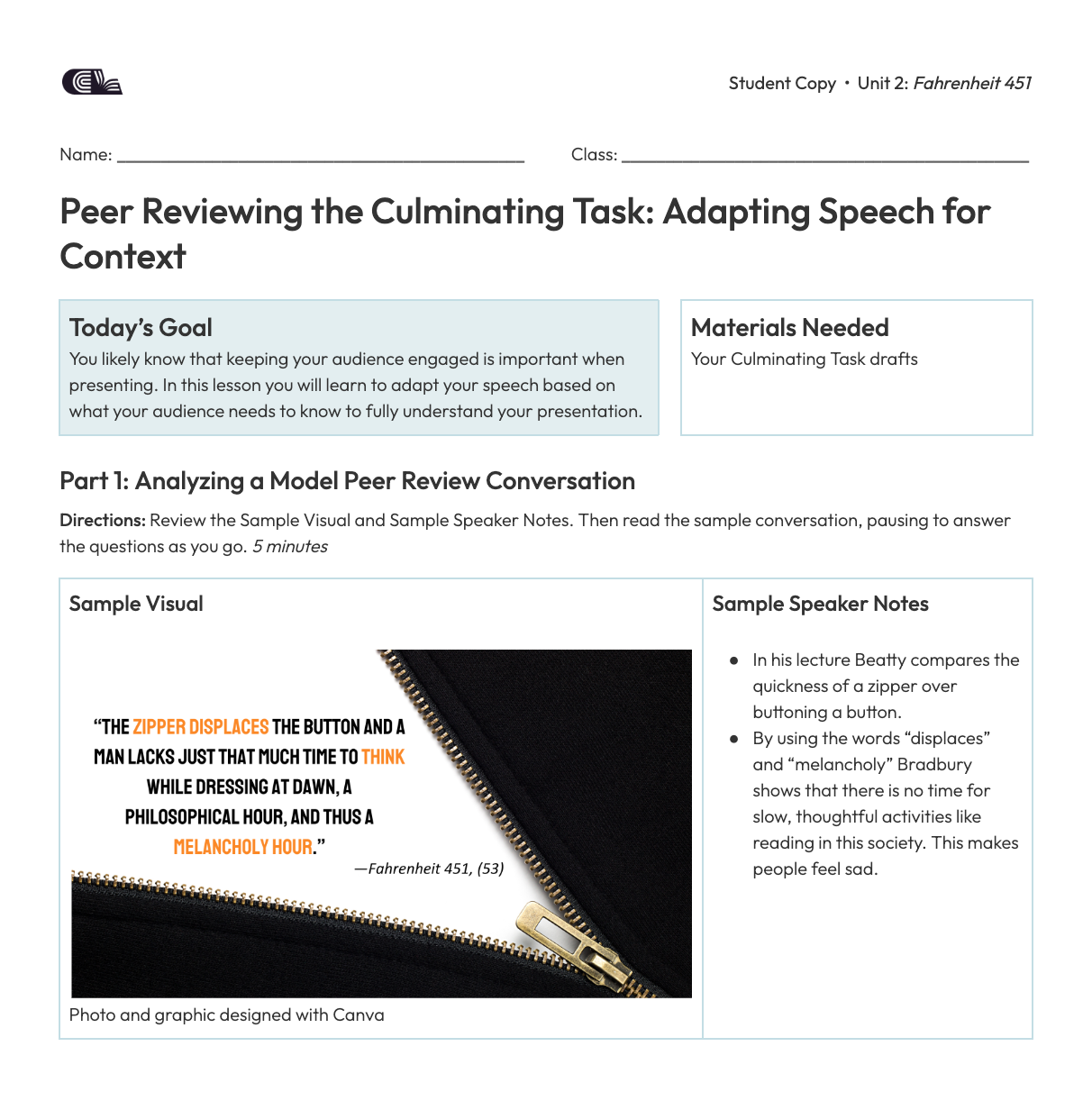
The Culminating Task: Putting It All Together
Each CommonLit unit builds to a Culminating Task which serves as a summative assessment for the unit, allowing students to apply their learning to demonstrate the skills and knowledge they have gained.
For example, in 10th grade Unit 2: Fahrenheit 451, students develop a presentation that explains how the author of their choice text uses the genre of science fiction to deliver social commentary. As students create their presentations, they will learn to strategically incorporate text and media into visual presentations and to write and adapt their speaker notes based on a peer review.
The Result: Confident, Capable Writers
When writing instruction is integrated with reading, speaking and listening, each learning experience deepens the next. Students read to build the knowledge and ideas they need to write. They discuss with one another to clarify and refine those ideas. And through writing lessons and Culminating Tasks, students learn to communicate those ideas with precision and clarity.
Interested in learning more about CommonLit 360?
One of our many goals at CommonLit is to ensure that teachers have the structure, insight, and support they need to help students succeed in all areas of ELA. Our team of CommonLit 360 experts can help. Both the Core and Elevate plans support the school and district-level rollout of the CommonLit 360 curriculum with additional assessments, professional learning, and ongoing implementation support.
