CommonLit 360 in 12th Grade: Independence, Belonging, and the Search for Meaning

Explore what a year looks like in a 12th grade CommonLit 360 classroom
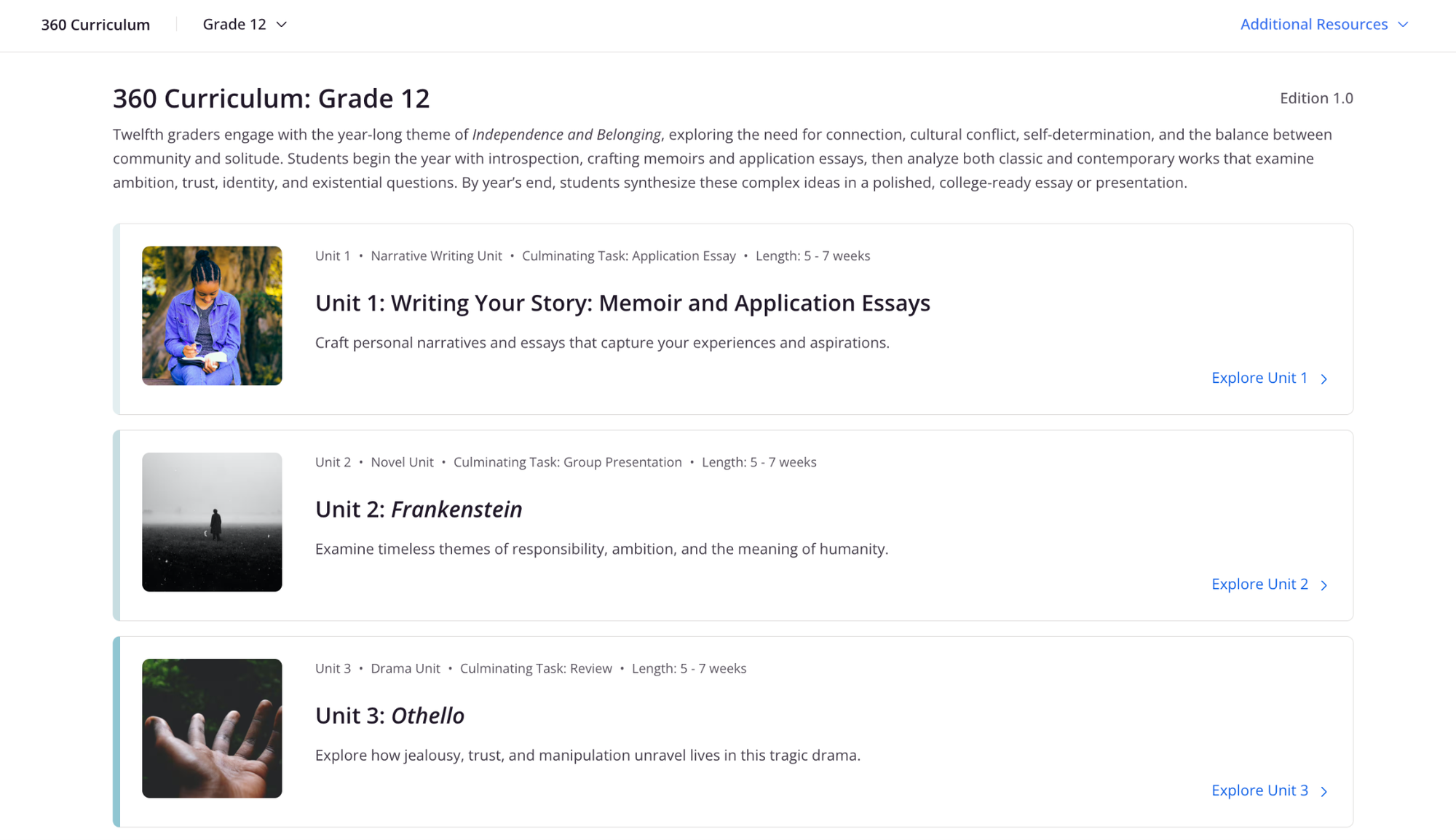
Twelfth graders engage with the year-long theme of Independence and Belonging, exploring cultural conflict, self-determination, the need for connection, and the balance between community and solitude. Students begin the year with introspection, crafting memoirs and application essays, then analyze both classic and contemporary works that examine ambition, trust, identity, and existential questions. By year’s end, students synthesize these complex ideas in a polished, college-ready essay or presentation. Throughout the year, students will read texts from renowned authors, like William Shakespeare, Mary Shelley, and Jhumpa Lahiri.
CommonLit 360 is designed as a full-year secondary English Language Arts curriculum, created with adolescents in mind. It is built to help teachers feel confident they are covering skills across all domains of ELA—reading, writing, speaking and listening—through grade-level units, meaningful culminating tasks, and lessons that intentionally build toward those outcomes. The curriculum uses a backwards planning approach, beginning with essential questions, thoughtful text selection, and rigorous culminating tasks so that instruction remains coherent and purposeful throughout the year.
What makes 12th grade CommonLit 360 stand out
In 12th grade, CommonLit 360 invites students to reflect on who they are, what they value, and how they make meaning in their lives. Students engage with memoir, classic literature, drama, and research-based argument as they explore ambition, trust, identity, and belonging. Teachers benefit from a curriculum that builds toward polished, college-ready writing and presentation tasks while giving students meaningful opportunities to analyze complex ideas and express their own perspectives.
You can check out the full Scope and Sequence for CommonLit 360. Below is a look at the six units that shape the year for 12th grade.
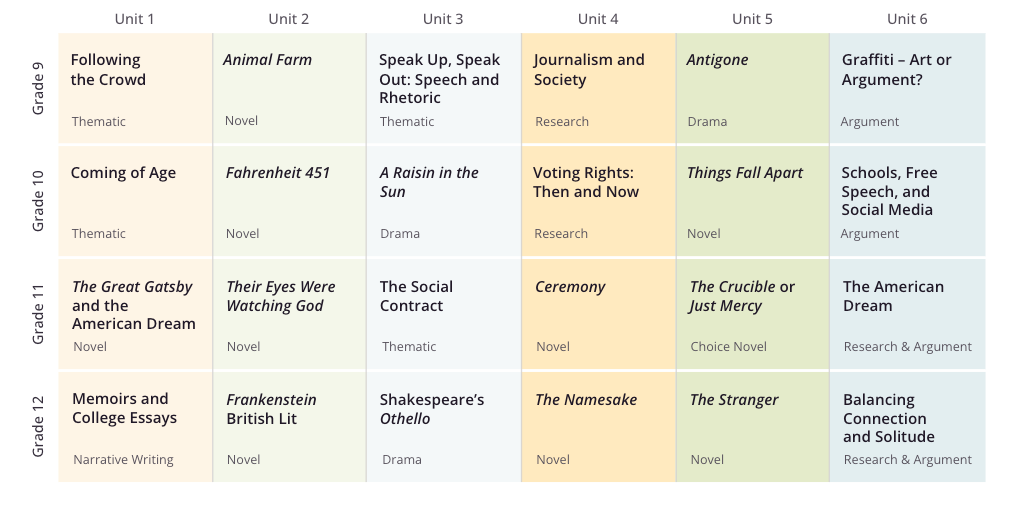
Unit 1: Writing Your Story — Memoir and Application Essays
Students learn how to write memoirs and application essays that capture their personal stories. Students first read engaging memoirs and consider how important moments, people, and places shape who we are and teach us important life lessons.
They also read model student application essays to understand how writers can use a variety of techniques to promote their best traits. As they move through the writing process, students strengthen their narrative writing skills and learn techniques to structure their writing, incorporate voice, and address a specific audience. Students produce memoirs and application essays that they can use beyond the classroom.
Unit 2: Frankenstein
During this unit, students read the classic 19th century novel Frankenstein by Mary Shelley and consider how its themes about the dangers of unquestioned scientific advancement and the harmful outcomes of heedless ambition continue to resonate. Students also explore themes about the nature of human progress and humanity’s ongoing quest for knowledge. The unit culminates in a research project in which students connect the novel’s thematic ideas to contemporary scientific concerns.
Unit 3: Othello
Students read Shakespeare’s Othello and consider the imperfections of humanity and the corrosive nature of jealousy. From Iago’s masterful villainy to Othello’s tragic fall, students are immersed in the world of Othello, where appearances are not reality, love turns to hatred, and accusations lead to disastrous outcomes.
In the Related Media Exploration, students learn key cultural background information about the accomplishments and history of the Moors. They also read poetry and nonfiction about why people become envious and how it affects them.
Students learn a new way to cite evidence, analyze literary criticism to deepen their understanding of the play, and incorporate that criticism into their own evaluations of the drama’s merit and relevance.
Unit 4: The Namesake
The Namesake by Jhumpa Lahiri is a moving story about family and culture that challenges students to consider the power that names have in shaping a person’s self-image. Throughout the unit, students read additional short texts to examine topics such as immigration, generational conflict, and relationships.
Students also have the opportunity to explore naming conventions in other cultures and the history of their own names through a Related Media Exploration. At the end of the unit, students demonstrate their understanding of the novel and unit themes by planning and presenting a podcast episode where they analyze the role of names within The Namesake and their own lives.
Unit 5: The Stranger
In this novel study, students read Albert Camus’s The Stranger, a 20th century classic that grapples with questions of conformity, disillusionment, social acceptance and the purpose of life. Students consider how people make meaning in their lives.
Through a Related Media Exploration, students explore the ways people derive meaning from art and dig deeper into The Stranger’s historical and cultural contexts, including Camus’s absurdist philosophy. The unit’s short stories and poems contrast with the novel, presenting diverging themes and perspectives on the meaning of life.
Students conclude the unit by writing a cross-textual literary analysis essay comparing how two characters that they have read about in twelfth grade navigate their relationships to society.
Unit 6: Balancing Connection and Solitude
In this unit, students explore a collection of essays and a lecture to discover different perspectives on connection and solitude. The unit includes data and related media on the consequences of isolation and constant connection.
Students probe further into why people seek out both connection and seclusion. As they examine these concepts, students strengthen their reading, research, and argumentative writing skills.
At the end of the unit, students apply these skills to an open-ended, student-driven research project exploring their own perspectives on community and solitude. Students choose whether to share their findings through an argumentative essay or a presentation
Twelfth grade is the culmination of students’ secondary literacy development. With CommonLit 360, students engage with texts and ideas that ask them to reflect deeply, analyze thoughtfully, and communicate clearly as they prepare for college, careers, and life beyond high school.
Curious about what other grade-level scope & sequences include? Check out our other CommonLit 360 Overview Blogs: 6th Grade, 7th Grade, 8th Grade, 9th Grade, 10th Grade, & 11th Grade.
Using CommonLit 360 as your shared curriculum
Our goal at CommonLit isn’t just to provide great unit materials. It’s to ensure schools have the structure, insight, and support needed to make those materials truly work for students.
That’s where School Essentials PRO Plus—and our team of CommonLit 360 experts—come in.
School Essentials PRO Plus supports the school and district-level rollout of the CommonLit 360 curriculum with the additional assessments, professional learning, and ongoing support.
What comes with School Essentials PRO Plus?
Professional Development
Through curriculum-based learning experiences, CommonLit Professional Development enhances teachers’ skills, knowledge and confidence to meet their students’ needs. Includes:
- Up to four 45-60 minute virtual professional development sessions for your team
- Unlimited access to CommonLit’s professional development webinars, exclusively for schools and districts with School Essentials PRO Plus
- Access to unit-specific internalization modules and planning resources for every unit in CommonLit 360
- Access to dozens of self-paced modules via CommonLit’s Professional Development Portal
- Option to purchase On-Site Professional Development
CommonLit 360 Curriculum Implementation Support
A CommonLit partnership includes a dedicated CommonLit account manager who provides:
- A kickoff meeting and mid-year curriculum implementation check-in with CommonLit experts
- Live facilitation of leader trainings (titled Building Your CommonLit 360 Leader Toolkit sessions)
- Ongoing support from CommonLit 360 experts to ensure your school’s implementation of CommonLit 360 is a success
Data & Assessments
This package includes Unit Skills Assessments for CommonLit 360, which provide teachers with additional insight into student learning throughout each unit. There are two assessments per unit, and they measure students’ comprehension of cold-read texts while helping teachers monitor progress toward grade-level skills.
Integrations
CommonLit 360 seamlessly fits into a school’s toolkit by integrating directly with Google Classroom, Clever, Canvas, and ClassLink.
